Categories
Case Studies

PeopleBest Analytics Unlocks $150M in Sales Growth for Financial Services

PeopleBest Analytics Unlocks $150M in Sales Growth for Financial Services

Case Study Overview:
National financial services corporation uses PeopleBest’s human performance analytics platform to maximize revenue.

SITUATION

A global financial services in the leadership development  space has the goal of doubling their business partners as quickly as possible.

A national financial services company with 849 managers had hit a growth wall.

While some salespeople consistently outperformed their peers, leadership couldn’t explain why. Traditional hiring produced inconsistent results, one top performer might emerge, but many others struggled to meet expectations.

STRATEGY

PeopleBest introduced its Human Performance Analytics Platform with a bold objective: uncover the invisible DNA of top performers and translate it into a repeatable system for hiring and development.

The project analyzed 433 salespeople across the organization. Instead of relying on surface-level indicators like résumés or past experience, PeopleBest mapped the deeper behavioral code driving sustained sales performance.

The results revealed a 40% FIT Zone—a unique profile of traits and competencies consistently shared by the highest performers.

By focusing hiring efforts within this FIT Zone, the company would generate an additional $150 million in sales growth over three years, $50M annually.


This wasn’t a projection. It was science.

RESULTS

The impact of this solution, on behalf of our client, resulted in the following:

  • $150,000,000 in forecasted sales growth, directly linked to smarter hiring.
  • A repeatable, data-driven system for identifying and replicating top performers.
  • Recruiters and managers armed with predictive insight instead of guesswork.
  • Training teams empowered to design targeted development plans that close skill gaps faster and raise overall performance.

For the first time, the company could see – before hiring – who was likely to succeed and how much revenue that success would generate.

Categories
Hiring Performance

Budgeting for 2025: The Cost of Staying Stuck vs. Unlocking New Ways to Hire and Retain Talent

Budget season is upon us! It’s about this time of year that many business leaders are knee deep in reviewing their financial plans for the upcoming year. While they scrutinize operational costs and forecast revenue growth, one area often gets overlooked: the real cost of not having the right people in the right roles. 

Year after year, leaders face the same struggles—high turnover, missed revenue targets, and people in roles they’re simply not suited for. Yet, many stick to outdated methods, avoiding the new ideas and technologies that could actually solve these problems.

So let’s break down what that actually means, and the impact it’s having on their organizations. 

The High Cost of the Wrong People

The pain of having the wrong people in key positions is real—and it’s expensive. Whether it’s the salesperson who just can’t close deals, the manager who can’t lead effectively, or the employee who’s disengaged and uninspired, the wrong people drain resources. 

Remember, poor performers don’t just miss their own targets—they also drag down team morale, cause inefficiencies, and can cost you customers. And if other team members are relying on their outputs for their own, it’s a giant domino effect. The results can be catastrophic. 

Think about the missed revenue when a top performer leaves because they’re frustrated by a lack of team support or poor leadership. Depending on your industry, losing a top performer can impact your bottom line, client or vendor relations which can result in impact of millions of dollars in revenue for years. Not to mention the turnover cost, which is significant. Some estimates suggest replacement fees are 1.5 to 2 times an employee’s salary. And worse, the ripple effects can linger, leaving a trail of missed opportunities and lost revenue.

Yet, despite these glaring issues, many leaders continue to rely on the same old hiring practices and hope for different results. Why? Because trying something new can feel risky. But what if staying stuck in outdated methods is the real risk?

People Are the Key to Success—And You Can’t Afford to Get It Wrong

Your people are the lifeblood of your company. Despite what some would have you believe, strategy is all well and good but you need the right people in place to make it happen the way you’ve envisioned it. But getting the right people in place—those who will perform, stay engaged, and drive results—takes more than just intuition or good intentions. It takes the right tools, insights, and willingness to explore new approaches.

The reality is that traditional hiring practices have left many businesses stuck in a cycle of reactive hiring, costly turnover, and missed performance targets. But it doesn’t have to be this way. 

Imagine a future where you can predict with near certainty how much a new hire will contribute to your bottom line in the first three years or how long they’ll stay with your company. 

Would you believe me if I told you that the tools to achieve this already exist? Yet too many leaders are afraid to step outside their comfort zones and embrace them.

New Ideas, Proven Solutions—A Game-Changer for 2025

At PeopleBest, we’ve developed AI-driven solutions that do just that. With 88-90% accuracy, we can predict how much revenue a new hire will generate or how long they’ll stay in their role. We’ve helped clients double their revenue in a year by focusing on getting the right people into the right positions. These aren’t just theoretical outcomes—these are real results, driven by advanced technology that takes the guesswork out of hiring and retention.

But here’s the truth: every year, leaders grapple with these same challenges. They know the pain of poor performers, they see the cost of turnover, and they feel the strain of misaligned teams. Yet, many remain hesitant to explore the solutions that could finally break the cycle. Why? Because embracing new ideas can feel uncomfortable.

The Possibilities for 2025—If You’re Willing to Change

The good news? 2025 doesn’t have to be another year of frustration and missed targets. With the right planning, the right tools, and a willingness to embrace innovation, it can be the year your business achieves its people’s goals like never before. Imagine the possibilities—higher revenue, longer tenure, more engaged employees, and a thriving culture of performance. By budgeting for smarter hiring practices and proven AI technology, you’re investing in solutions that deliver results.

The choice is clear: stick with the same old methods and face the same challenges, or take bold steps toward new ideas that offer nearly guaranteed outcomes. PeopleBest’s predictive solutions can make this a reality. The question is, are you ready to open the door to new possibilities?If you want to discuss what those opportunities might look like for your organization, feel free to reach out!

Categories
Uncategorized

Is the Resume Dead (Part 2)

Is the Résumé Dead (Part 2)

A couple weeks ago, I was really excited to share a blog called – Is the Résumé Dead.  The topic is fascinating to me because my team and I are constantly working with big clients that use the most advanced Applicant Tracking Systems (ATS) in the world, especially in how they inbound and process resumes – and yet, they still need hiring help.  

Confession, I was also patting myself on the back for a blog well done. I thought I had covered all the most important topics and felt like the blog itself could be helpful to you readers. 

But then on September 4, 2023, just two days later, I came across a brilliant piece written by one Katherine Bindley entitled The New Recruitment Challenge: Filtering AI-Crafted Résumés. I started my day as I always do, with a coffee in and and popping online to the Wall Street Journal, only the best newspaper in the world, in my humble opinion, and there it was! I read through and I was blown away by the details and the perspective. 

My first instinct was to STOP the presses on the blog I just wrote. And then I thought, why not just expand on it? The information in her piece was just too good for me not to include. I’ll tell you why in just a minute. 

So fortunately, I have a great team that encouraged me by saying, “hey Jim, why not just publish the first one, and do a part two that is dedicated to this new information?” They convinced me that the first piece may provide my initial perspective and that this one could be dedicated to the nuances not covered in the first. 

And so, here we are. Now, let’s get into WHY this is such a great read – and why I think Katherine Bindley deserves a tremendous amount of credit for the origination of some amazing content. 

Bots Are Flooding Companies with AI-Generated Resumes
Katherine talks about how the use of generative AI to mass-produce résumés is overwhelming hiring systems, forcing companies to rethink their processes. Candidates are using AI tools to churn out résumés in rapid succession, sending out applications at a rate impossible without automation. What used to take hours or days is now done in minutes. Companies are receiving so many résumés that it’s clogging their hiring pipelines, leading recruiters to reinstate human review steps or even close job postings in less than 48 hours.

My Take: As I mentioned in my prior blog, with this surge of applications, most good candidates will be buried under a mountain of AI-generated résumés, never even making it to a hiring manager’s desk. It’s not just about finding the right person—it’s about whether you even get seen. If the first step in the hiring process is broken this badly, it doesn’t bode well for finding an authentic person, let alone one who is great for that role.

Fake Candidates Are Gaming the System—and Getting Hired
Katherine talks about the surge in fake candidates using AI to fake their way into roles is creating major hiring risks for companies. AI isn’t just making it easier to apply to jobs; it’s helping people fake experience, skills, and even entire identities. Candidates are lying on their résumés, using AI to inflate their experience or paying third parties to help them cheat their way through interviews. Some are even using software during Zoom calls to get real-time prompts or assistance, meaning companies are sometimes hiring candidates who can’t do the job they claim to be able to do.

My Take: This is a serious issue. Companies are wasting time and resources hiring people who aren’t qualified.  Let me say that again – “Companies are wasting time and resources hiring people who aren’t qualified.”  I can only imagine what kinds of massive liabilities this creates if they mismanage responsibilities, leading to costly mistakes, data breaches, or operational failures. This is where our clients use us to manage this challenge.  No one can game a PeopleBest behavioral profile – and if you try, it shows up on the scores if you try.You get to know they are both ‘real’ and a great ‘FIT’ or not for the role.  Sure, you can have someone else take a profile, but while you may get by this step, you’ll wash out when you get in the role.  And we have yet to see this in our 20 years in business either.

Automation Is Filtering Out Real Talent
In this section, Katherine talks about how automated hiring tools are causing good candidates to be rejected before a human even sees their résumés.  As she explains, for years, companies have used software to filter résumés, searching for specific keywords or qualifications to narrow down applicants. The problem? These systems are weeding out potentially great candidates who don’t use the right keywords or don’t tailor their résumés in a way that the software can detect. This creates a bottleneck, where real talent is bypassed for algorithmic efficiency.

My Take: Spot on.  Here’s a cut & paste from my prior blog:   “88% to 94% of recruiters believe ATS systems reject qualified candidates because their resumes lack the proper keywords or are not formatted correctly. Other sources cite that 75% of resumes are discarded due to readability issues.  So, it seems like ATS’s are sifting out, in a very efficient manner, most everyone you’d want to hire.”

Hiring Managers Are Fighting Back with More Human Touchpoints
The big idea here is to combat these AI-driven issues, companies are adding more personal filters to the hiring process. Recognizing the flaws of purely AI-driven hiring processes, companies are beginning to add more human elements back into the mix. Recruiters are now asking candidates to complete personal questions or video recordings before their applications are considered. In some cases, they’re even adding live coding tests or asking candidates to explain their thought processes in interviews to weed out those hiding behind AI.

My Take: Finally, a good approach – but there are still lots of holes.  The premise is that companies can’t rely solely on machines for something as human as hiring. Ok, fine. Technology may be great for scaling, but when it comes to finding the right talent, human judgment is also really flawed. If you’ve heard about the Halo effect, people are influenced immediately, either positively or negatively and this bias is all but etched into their perception of a candidate. We don’t seem to be talking about diversity anymore, but we were the best solution to looking at anyone in a completely unbiased way. We just looked at their behaviors as a match to the exact requirements in our clients jobs.  Can you do the job or not?  If yes, great.  If not, both the person and the company would probably be miserable in cutting short where that person could be more successful.

Fake Résumés Lead to Real Business Risks
Here’s a huge point that Katherine hits on, the rise of fake résumés and applicants using AI tools is leading to disastrous hiring decisions. Recruiters are discovering that many candidates are faking entire résumés, claiming experience they don’t have and even getting hired for roles they can’t perform. Some companies only realize the deception after weeks or months when the employee fails to meet expectations—or worse, when they cause damage through incompetence.

My Take: This is just scary.  We do see a LOT of resumes and will say there’s not a super high correlation of what they’ve done compared with whether or not they will be successful in a potential role.  Even WITH using our clients exact, customized job profile.  Why? Because each job is unique, because each company is unique.  Some of the basics, like organization or creativity can be easily matched, but I’m talking about achieving OKR’s, KPI’s, changing a dynamic such as a team that either needs to be motivated or replaced, in part or in whole.  Completely different challenges within a completely different culture.  We can absolutely answer any of these unique questions and that’s exactly why our clients love us…!

Candidates Are Relying on ChatGPT—But Not Fooling Anyone
Lastly, Katerine talks about candidates who use AI tools like ChatGPT for coding tests and interviews are facing increased scrutiny. She explains that while some companies allow applicants to use tools like ChatGPT to help with coding tasks, they’re not letting it go unnoticed. Candidates are required to explain the tools they used, show their work in real-time, and justify their thought process. Companies are making sure that candidates know how to do the work.

My Take:  I think this is a great idea.  AI is here.  Useful if managed.  The use of AI in applications and interviews is reaching a critical point. If companies put safeguards in place to ensure they hire people who can think for themselves, great!  I will say I see companies all day long that are or have filled roles with people who can talk the talk but can’t walk the walk, leading to poor performance, wasted time, and a hit to innovation, let alone a huge hit to the bottom line in the millions.

My final Take

I owe Katherine Bindley a huge ‘Thank You’ for her nailing her research, insights and professional insights in this article.  I’m driven by helping find success inside of people, teams and companies.  We can either use technology for good or harm.  History gives us many examples of this too often.  I believe we are up to these challenges, each one.  Tools are just that. The tools that were supposed to streamline hiring are now the same ones that are clogging the system with fake candidates, overwhelmed hiring funnels, and unqualified hires. We can figure this out and have been for the last decade.  

By focusing on authenticity, understanding the inside of the person with their strengths and corresponding weaknesses, thorough vetting, companies can fix their internal systems and add better AI-driven hiring solutions making sure they find the right person for the right job, not just the person who knows how to game the system.

I found there is a podcast from Katherine today:  How AI Is Helping ‘Fake Candidates’ Land Jobs which Katherine and her colleagues share even more insights.  Fantastic stuff – a MUST listen.  Thank you again, Ms. Bindley!

Write to Katherine Bindley at [email protected]

Write to Jim Hunter at [email protected]

Categories
Case Studies

PeopleBest Analytics Predicts Future Franchisee’s Revenue

PeopleBest Analytics Predicts Future Franchisees Revenue

Global leadership franchisor find PeopleBest’s human performance analytics platform critical to selecting only the most successful franchise prospects.

SITUATION

A global franchising organization in the leadership development space has the goal of doubling their franchise business partners as quickly as possible.

The franchisor has developed an extremely successful system that empowers franchisees to help business owners achieve strategic and operational success through their proven processes. The selection of high-quality franchise owners remains a top challenge for our client.

The current selection process has produced inconsistent results with a success rate of less than 40%. This has resulted in many franchiseesfailing to recover their upfront franchise costs.

The task of finding successful, 10X producing franchise owners can be quite challenging.

The most successful franchisees need to be adept at acquiring clients, being masters at helping C-level professionals develop their vision and strategy and set into motion disciplined action steps to create processes that will lead to sustainable performance and leverage growth.

PeopleBest was tasked with codifying the identity of a successful franchisee in a platform that could be easily scaled by the client. There was no current system to accurately assemble the right combination of behavior traits that would impact the achievement of performance goals.

STRATEGY

Five steps were used to discover the identity of a successful franchisee.

1.    Prep:  To develop a baseline PeopleBest implemented a process review, analyze and code all the measures the client used to define what makes a franchise owner successful, beyond revenue numbers.

In this project, our client also used their internal “5 Values” as a component of success. We acquired the content needed to build this customized measurement in our software. The client had a list of 80+ items the wished to be included in our project to see which ones correlated highly to their best franchise owners.

2.    Collect Once the analysis tool is programmed, the franchise owner population (650 owners) was informed of the project.

We shared our key objectives; to find and develop the best new owners in the organization as well as for PeopleBest to initiate its software out to the same population. As a thank you for their participation, franchisees received the PeopleBest 8-page Leadership Brief, which outlined their scores compared to the findings of Dr. Daniel Goleman’s 6 Leadership Styles.

3.    Analyze Upon receiving a critical mass of participation (65% of franchise owners) to measure what traits, competencies, values and survey data correlated to a successful franchise owner the software began its comparison.

Our multi-factor correlation provided the exact ranges and importance of each trait, competency and element in the survey of the most successful franchise owners.

4.    Validate Provide an overview of the most important traits, competencies, revenue data and a discussion of how this would impact their recruiting, on-boarding and life-cycle of their future franchise owners.

The impact to other parts of their business, especially in knowing where the gapswere within the existing franchise owners helped the training and development teams to pinpoint specific solutions to what an owner would need. Additionally, given the information of the backgrounds of their most successful owners, recruiting was able to source from the sources that have produced the best owners.

5.    Predict Train our clients recruiting team to implement simple scores to help in their evaluation process. As part of this step we ensured there was also follow up ‘check-in’s’ to make sure they were understanding how to use scores and how to get future owners excited as they could feel more confident in their future success.


RESULTS

$19M New Annual Revenue

Hiring their next 600+ new franchise owners, using a score of 50 or higher would help them gain an additional $19 million in future revenues each year compared to current franchise owners average revenue who scored less than 50.

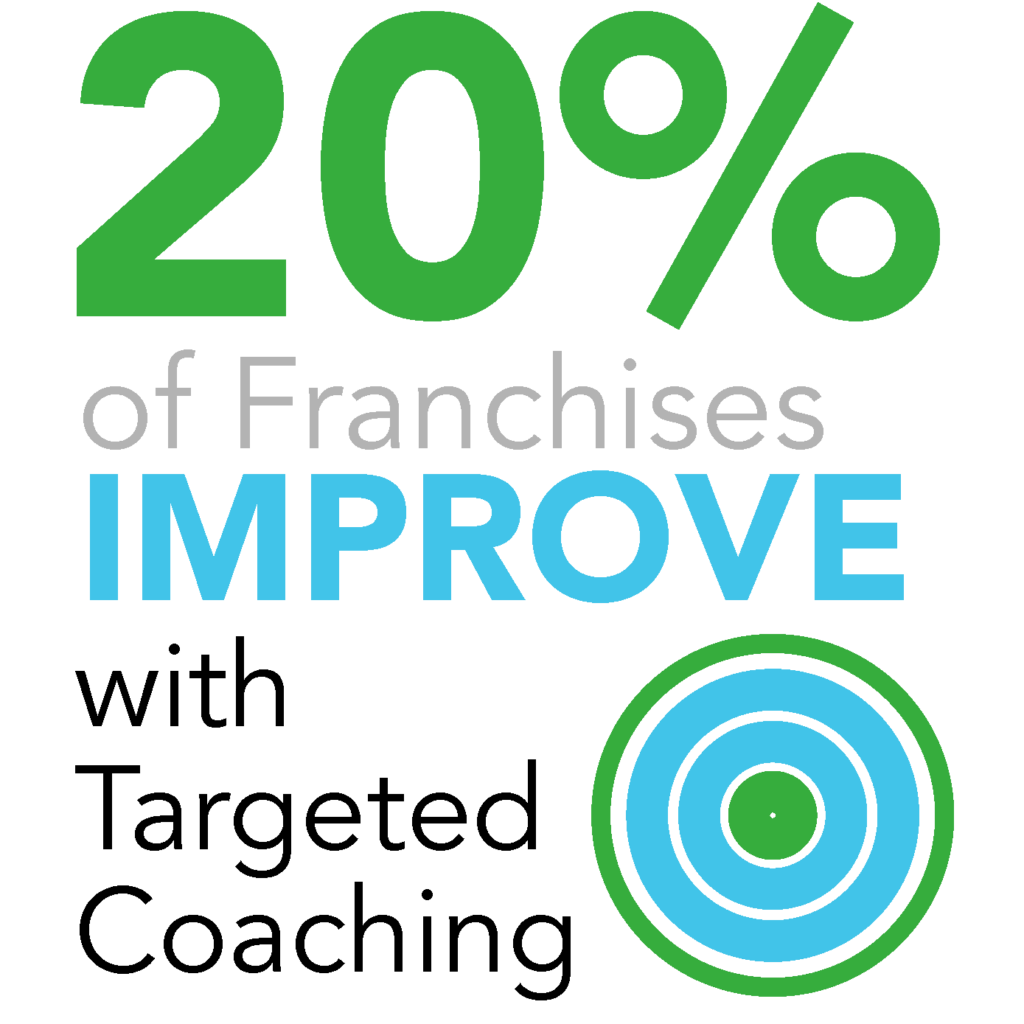
20% of Franchises Improve with Targeted Coaching

Creation of targeted coaching programs for the bottom 20% of their current franchise owner base – would result in approximately a $5 to 10 million improvement annually.

Key
Takeaways

  1. PeopleBest’s ability to ‘Predict Revenue Generation’ is a groundbreaking innovation, setting the new standard in the behavioral analytics industry.

  2. PeopleBest DNA results provide a customized solution to quickly evaluate future franchise owners capabilities beyond revenues, such as ‘values’ proves to enhance our clients culture.

  3. The solution provides a blueprint for creating accelerated growth and success inside the entire organization using specific and measurable insights to adjust performance.

  4. Future insights and data will only serve to make current models stronger and more accurate as time goes by.

Categories
Uncategorized

A Blueprint In Coaching Success

Blueprint For Coaching Success

Case Study Overview:

PeopleBest development solutions will accelerate employee impact and culture adoption.

SITUATION

A national Agile consulting client has a best practice approach to ensure their new hires are able to ‘hit the ground running’ to serve clients. This approach is a result of PeopleBest deploying its analytics in developing a blueprint of success inside each of their client-facing roles. They focus on an onboarding and coaching plan that is tailored to what the new employee needs and who they are. This case study follows a new employee.

Kat, in her first role post college as an Engagement Analyst. This account describes her assimilation and growth path over the first two years and how it can work in developing her behaviors directly related to her role and personal growth.

The assessment results not only helped the organization evaluate her as a candidate but served to shape her performance and accelerate her accomplishments. Results were reviewed with Kat to ensure she had awareness and insight on how to make adjustments when facing challenges. Her coach was able to use results to customize the onboarding and coaching plans.  The data provided insights into areas of strengths that facilitated accelerated learning and also pointed to areas of growth.

STRATEGY

Four components were examined to guide Kat’s growth plan:

  • The first component was the overall Job FIT level based on an algorithm of other successful people.
  • The second was Style preferences including work, interpersonal, engagement and self-concept.
  • The third component measured 29 traits which are precise and actionable behaviors clarifying the individual’s strengths and opportunities.
  • The fourth looked at her strength level of each significant role-based competency as a new hire and again two years later.

The goal was to connect with her on how and why the response to better address a situation. She was also better able to observe impact as she applied strategies.

The initial results identified priority areas that would shape the onboarding experience by tapping into her “code of success”  The ongoing coaching continued to reinforce Kat’s commitment to demonstrate tangible evidence of improvement in growth areas such as influence, resilience and self-assurance.

Ongoing feedback, role experience and reflections with her coach helped her to accelerate skill development and leverage self-awareness to make shifts situationally for better results.

RESULTS

Comparison: 2022 - 2024

Overall, Job FIT Score (1-100 scale)  from 55 to 95, rounding out her abilities to identify opportunities to excel in the most important competency areas.

Styles

Work Style:

From the Producer to Improver quadrant showing she’s moving away from taking orders to tweaking processes for better outcomes. She will work toward a more transformative approach to take more risk and be able to move at the pace of change.

Interpersonal Style:  

From Supporter to Uniter indicating improved effectiveness at  communicating with others.

Trait Scores

These are based on PeopleBest’s  29 unique traits on a 1-10 scale.  They reveal the degree of match to  the desired range in each area.

Significant changes in influence, vitality, trust, creativity, self-responsibility, deliberateness and mobility. These changes gave insight into how Kat was adjusting to the organization, in executing her responsibilities, connecting with others and identified areas of continued growth.

Competencies

Four competencies showed significant growth such as Resilience & Drive and Thriving in Uncertainty. Some areas showed a decline in strength such as Curiosity. These will be targeted for coaching and development in the year ahead.

Key
Takeaways

  1. PeopleBest DNA results provide a well-rounded evaluation of the new hire’s capabilities and areas of risk.

  2. It provides a blueprint for creating accelerated success in the role so that the individual can use the insights to adjust their thinking, responses and guide their intentional action in any given situation.

  3. Results provide a valuable tool for their assigned coach by working with a common performance language to partner together on identifying the best onboarding approach, development priorities and creating a progressive improvement plan.

  4. Comparison results over time can be generated to fully understand where strides have been made and where continued work can progress.

  5. Facilitates effective feedback and conversation around actual work challenges and how the employee deployed insights and learning to achieve a specific outcome.

Profile Data Observations

The PeopleBest profile data was integrated with a well thought out coaching process which increased her engagement within the role resulting in personal satisfaction. It established behavior targets so that adjustments could be made to achieve better outcomes.

Her coach was able to be more precise in creating contextual applications to guide her work with team members, clients and other stakeholders. 

This approach increased retention as Kat was thriving in personal and professional growth. One of the most valuable outcomes was improved performance to her clients which resulted in greater team and client satisfaction.

This overall approach, using key behavior data points with a coaching process tailored to individuals, validated the company’s strategy to hire more junior professionals, at a cost savings, and in turn develop teams using this ‘code of success’ approach.

The bottom line is this ‘best practice’ approach Increases engagement and retention resulting in consistency in serving clients in a cost effective and efficient manner.